


Nostalgia Marketing: Real-World Examples to Drive Engagement in 2024
Do you ever find yourself scrolling through social media and suddenly seeing something that takes you right back to your childhood? That鈥檚 not just a coincidence鈥攊t鈥檚 a powerful marketing strategy known as nostalgia marketing.
We can’t blame you; nostalgia marketing has proven highly effective. It fosters social connectedness and decreases the desire to hold onto cash鈥�.
In this blog, you’ll discover how to use retro to drive engagement and learn how brands can employ nostalgia to boost customer engagement, spark emotional connections, and differentiate themselves in an increasingly crowded market.
What’s Inside
- Understanding Nostalgia Marketing in the Modern Context
- Successful Nostalgia Marketing Campaigns from Popular 天美传媒女优s
- Pepsi – #ShowYour90s & Crystal Pepsi
- Microsoft – Child of the 90s
- Adobe – The Joy of Sketching
- Motorola Razr聽
- Nokia
- 顿颈蝉苍别测听
- 尝别厂辫辞谤迟蝉补肠听
- Integrating Nostalgia into Different Marketing Channels
- Pitfalls to Avoid in Nostalgia Marketing
Key Takeaways
- Nostalgia & retro vibes elicit strong emotions, which can enhance brand loyalty and engagement.
- Combining memes and nostalgia marketing can make a brand stand out by offering something timeless and comforting.
- Emotional engagement created by nostalgia boosts consumer spending. This makes it a powerful tool for marketers.
- 天美传媒女优s are increasingly integrating nostalgia across various channels, from social media to email campaigns, to drive emotional engagement and connect with their audiences on a deeper level.
- Striking a balance between nostalgia and modern messaging that speaks to younger audiences who are not familiar with the past is important.
Before exploring how to tap into the power of the past and connect with modern consumers, you鈥檙e invited to discover why we feel nostalgia.
Nostalgia was once considered an illness confined to specific groups of people. Today, people all over the world report experiencing and enjoying nostalgia.
Understanding Nostalgia Marketing in the Modern Context
Let us start with some neuromarketing truths: Nostalgia marketing works by engaging the brain鈥檚 emotional and reward systems, creating a sense of familiarity and comfort.
The activation of dopamine through the use of memories helps brands create emotional connections with consumers. It eventually increases engagement and drives purchases.
We also know from that leveraging familiar visual cues and memories can significantly boost brand loyalty and influence consumer behavior.
What鈥檚 more, a study published in the found that people were more willing to spend money on products when feeling nostalgic. The researchers conducted six experiments showing that nostalgic feelings decreased the participants’ desire for money, leading them to part with more of it. This was due to nostalgia’s ability to foster social connectedness, weakening their attachment to money.
And yes, that deep connection is the main reason for the rise of nostalgia marketing.
Then, let鈥檚 focus on how brands use nostalgia marketing.
天美传媒女优s embrace several ways to trigger the psychological responses mentioned. The most known way is redesigning logos or packaging. Research shows that familiar visual cues trigger the brain鈥檚 recognition system, which activates the prefrontal cortex, a key area responsible for decision-making and trust formation. Remember Pepsi鈥檚 move to 鈥�?鈥�
Another way to evoke nostalgia is to create throwback campaigns and revive popular products. Pepsi鈥檚 reproduction of Crystal Pepsi is one of those.
What鈥檚 more, pop culture symbols from past decades, like music or movies, are items used in nostalgia marketing. These references create instant emotional connections that make marketing campaigns more memorable and engaging.
Successful Nostalgia Marketing Campaigns from Popular 天美传媒女优s
Do you remember that iconic Coca-Cola polar bear ad, or perhaps the 鈥淛ust Do It鈥� slogan that seemed to be everywhere in the 90s? These ads didn鈥檛 just sell products鈥攖hey created lasting memories. That’s the magic of nostalgia marketing.
Popular brands have tapped into these beloved moments from our childhood, bringing them back in ways that feel familiar yet refreshed. These campaigns rekindle those warm, fuzzy feelings we associate with simpler times, connecting emotionally with audiences on a deeper level.
Pepsi – #ShowYour90s & Crystal Pepsi
As we mentioned earlier, Pepsi is one of those brands that totally captured the soul of nostalgia.
With their #ShowYour90s contest to celebrate the re-release of Crystal Pepsi, the well-known brand encouraged fans to share their favorite 90s memories using the hashtag.
This nostalgic revival created excitement for the product while boosting Pepsi鈥檚 engagement on social platforms, proving just how effective tapping into shared cultural memories can be.
If you enjoy Pepsi’s digital marketing approach, you might also want to look into Coca-Cola’s marketing strategy, as the popular brand uses comparable tactics.
Microsoft – Child of the 90s
Even though it was released in 2013, 惭颈肠谤辞蝉辞蹿迟鈥檚 “Child of the 90s” ad is a prime example of nostalgia marketing before the term gained widespread popularity.
This campaign was designed to promote Internet Explorer by taking viewers on a journey back to the 90s. Featuring familiar icons like Tamagotchis, slap bracelets, and old-school dial-up sounds, it appealed to the generation that grew up in that era鈥攔eminding them of simpler, nostalgic moments from their youth.
You grew up. So did we. Reconnect with the new Internet Explorer.
Although it wasn鈥檛 explicitly labeled as nostalgia marketing at the time, “Child of the 90s” perfectly encapsulates the emotional power of this strategy.
Adobe – The Joy of Sketching
Released as part of their campaign to promote Adobe Photoshop Sketch, this ad nostalgically evokes the simple pleasure of drawing. The video brings a charming, vintage tone, reminiscent of Bob Ross鈥� “The Joy of Painting,” which itself is an iconic piece of pop culture from the past.
We鈥檙e celebrating the 25th anniversary of the very first episode of the Joy of Sketching – we mean Painting – with a little bit of Photoshop Sketch fun. In episode one, our Bob Ross lookalike will cover the PS Sketch basics you need to know to create a mighty little painting of your own.
Motorola Razr
Did you miss those days when you flipped your phone to answer a call?
Motorola certainly thought you did, and they brought back the iconic Razr flip phone with a nostalgic twist.
Motorola鈥檚 Razr revival, in teaming up with Paris Hilton, is a perfect example of nostalgia marketing done right, blending pop culture with technology.
The collaboration with Paris Hilton, a pop culture icon of the same era, was a clever move to remind millennials of their youthful, trend-following days when Hilton was synonymous with fashion, technology, and early social media.
Nokia
Let us take a quick look at another “cellphone” brand, which used to be the most well-known: Nokia.
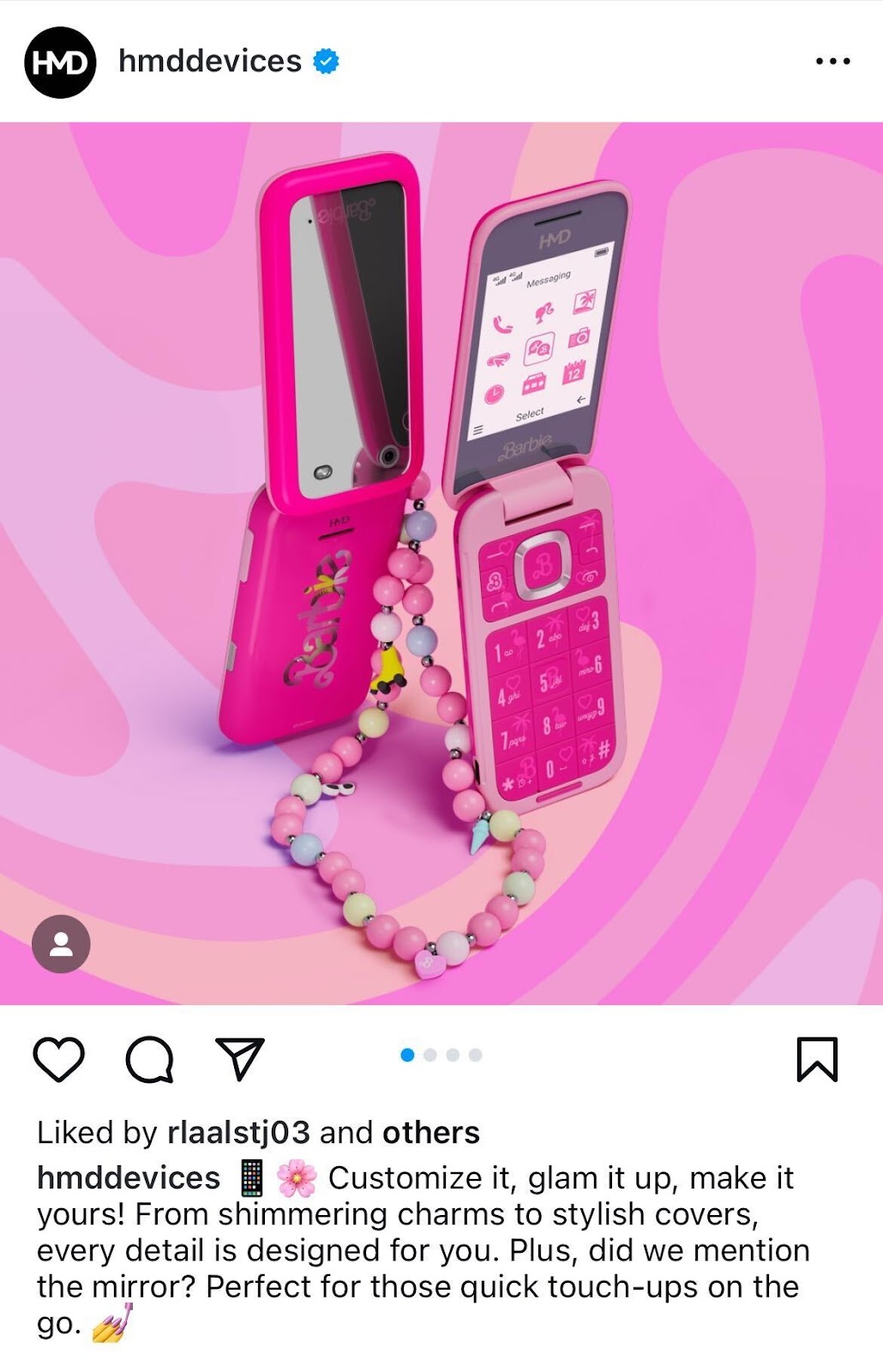
Even though the brand doesn鈥檛 do marketing at the same level as the abovementioned ones, the help of the users of social media channels gives Nokia hype. Especially Nokia鈥檚 flip phones with customizations get thousands of likes online. Unless the brand’s marketing team puts time and money into nostalgia marketing, it seems to work so well for the company.
Disney
No doubt, nostalgia marketing is a great part of Disney鈥檚 marketing strategy.
Through carefully crafted posts, Disney brings back the beloved characters, fonts, and visual elements from movies like The Lion King, Aladdin, and Beauty and the Beast, evoking the essence of the 80s and 90s.
One of the most effective techniques Disney uses is reviving old posters and VHS cover designs, combined with nostalgic fonts and imagery鈥攇rainy textures and muted colors鈥攎aking their social media posts feel like throwbacks to those years.
These posts, often paired with captions like “Do you remember watching The Lion King for the first time?” create an emotional bond, encouraging viewers to relive their fond memories. This style perfectly taps into their core audience鈥�millennials and Gen X鈥攚ho grew up watching these movies.
LeSportsac
When it comes to 80s and 90s nostalgia, LeSportsac is among the best examples, even though many fashion brands use nostalgia as a marketing strategy.
LeSportsac revived its recognizable bags from the 1980s and 90s while adding a contemporary touch, capitalizing on nostalgia marketing. Known for its durable, lightweight, and colorful designs, LeSportsac reconnected with its original fan base by bringing back prints and styles that defined the brand decades ago.
A key example is their collaboration with pop culture icons like Hello Kitty and Peanuts, tapping into the childhood memories of many consumers who grew up with these characters. LeSportsac’s campaign didn鈥檛 just stop at product design; they incorporated throwback elements in their social media promotions, including vintage-inspired fonts, old-school patterns, and retro aesthetics to celebrate the brand’s heritage.
Integrating Nostalgia into Different Marketing Channels
Now, we know how well-built nostalgia marketing campaigns work. Still, one question remains: Which channels are the best for nostalgia?
Actually, we recommend you embrace a multi-channel approach.
Using nostalgia across multiple platforms can be incredibly effective because it resonates with different types of consumers in unique ways. Social media, for example, allows for more interactive and visually dynamic nostalgia (like sharing retro videos), while email newsletters can highlight signature products or designs in a more personal way.
We definitely recommend this strategy for marketers, especially when targeting millennials and Gen X, who are particularly responsive to nostalgic content. The key, however, is balance. Although nostalgia can be captivating, it must be combined with contemporary components to guarantee that your brand is still relevant today. (In the section that follows, we will discuss common mistakes made when using nostalgia in marketing.)
Speaking of social media, if done correctly, combining retro vibes and meme marketing can be a winning digital marketing strategy for brands, especially when engaging with audiences on platforms like Instagram, Twitter, and TikTok. At that point, it is important to ensure that the nostalgic references are relevant to the brand and resonate with your audience.
Pitfalls to Avoid in Nostalgia Marketing
As with any useful marketing tool, there are risks associated with using nostalgia marketing incorrectly. Let us specify the:
- Focusing too heavily on past references can alienate new audiences or make the brand/business feel outdated.
- When brands force nostalgic elements without genuine ties, they risk coming across as opportunistic, which can damage their credibility.
- Overusing memes or forcing nostalgic references can make a campaign feel disconnected from its target audience. To avoid coming across as overly desperate to be “in on the joke,” it is critical to find the ideal balance.
- Ignoring diversity or cultural sensitivities in nostalgic content can backfire, as past references may no longer align with current societal values or norms.
In summary, if nostalgia marketing is not done carefully, it can be a double-edged sword in the digital marketing ecosystem. So, fingers crossed while using that effective tool!


