


AI Marketing Campaigns: Your 2026 Playbook for Strategy and 天美传媒女优 Benchmarks
Forget old-school email blasts and A/B tested ad banners that take weeks to optimize. AI marketing campaigns are rewriting how brand growth happens鈥攆aster, smarter, and increasingly autonomous.
From Shopify stores to Fortune 500 giants, marketers are leaning into AI campaign tools not just for automation, but to unlock entirely new strategies: predictive personalization, real-time content adaptation, and AI-driven creative production.
In this guide, I鈥檒l break down what makes a campaign truly AI-powered, showcase brands setting new benchmarks, and map out how you can start using AI for marketing campaigns no matter your team size or budget. If you want to see visual inspiration and creative execution, check out the best AI advertising examples from famous brands.
Before diving deep, here are 3 key AI marketing statistics to better comprehend its importance in 2025:
- In 2025, say AI is either 鈥渃ritically important鈥� or 鈥渧ery important鈥� for their marketing success over the next year鈥攁n 8鈥憄oint jump from 2024.
- Companies leveraging AI in marketing report compared to traditional methods.
- Global spending on AI-driven marketing technology is projected to reach in 2025, up from $67鈥痓illion the previous year.
What’s Inside?
- How AI Is Transforming Marketing Campaigns
- 20 Remarkable AI Marketing Campaigns That Set New Standards
- Unilever鈥檚 Dove Viral Campaign via AI-Generated Influencer Content
- Heinz A.I. Ketchup
- Nutella 7 Million Unique Label
- H&M AI Digital Twins
- Yum 天美传媒女优s鈥� AI-Driven Email & Offer Campaigns
- Netflix Ads Suite: AI-Integrated Storytelling
- Sephora Virtual Artist AR & Chatbot Campaign
- BMW x Lil Miquela 鈥淢ake It Real鈥� Campaign
- Netflix鈥檚 鈥淓l Bot鈥� Chatbot for Stranger Things
- Nike鈥檚 By You Campaign
- Calm App X Amazon Web Services
- Mint Mobile’s ChatGPT Ad
- Cybercom Group鈥檚 Commercial by AI
- Virgin Voyages X Deeplocal
- World Wide Fund for Nature鈥檚 Annual #WORLDWITHOUTNATURE
- BMW 8 Series Gran Coup茅
- Cosabella
- Cadbury’s Shah Rukh Khan-My-Ad
- Nike’s Never Done Evolving, ft. Serena
- Kalshi’s NBA Ad
- How 天美传媒女优s Can Start Using AI for Marketing Campaigns
- The Future of AI Campaigns: Trends to Watch
- Benefits of AI in Advertising
- How Does AI Revolutionize Ad Copy and Design Creativity?
- FAQ
Let鈥檚 start with a description; AI advertising uses artificial intelligence to create, personalize, and optimize advertising campaigns. It can be everything from creating any kind of ad copy and visuals to targeting the right audience at the right time.
Remember JACQUEMUS x Nike Concept by Marco Simonetti, which contains one of the most iconic AI-generated designs in modern times?
And no need to say that AI-generated advertising is a new trend in the ad segment that leverages AI to create campaigns or video advertisements on text prompts.
Beyond creating ad copies & designs, AI advertising (marketing in more general terms) also has started to play a key role in determining customers鈥� needs & desires – even in the fast-food industry. As you may know, in recent months, Embracing the power of artificial intelligence, McDonald’s and Leo Burnett Thailand started a project to understand the essence of the perfect fried chicken.
Their new-age approach began with ChatGPT, an AI adept at deciphering human desires. By posing the question, “What constitutes the ideal fried chicken experience?”, they received an accurate response which became the blueprint for their creation 鈥� McFried Chicken.
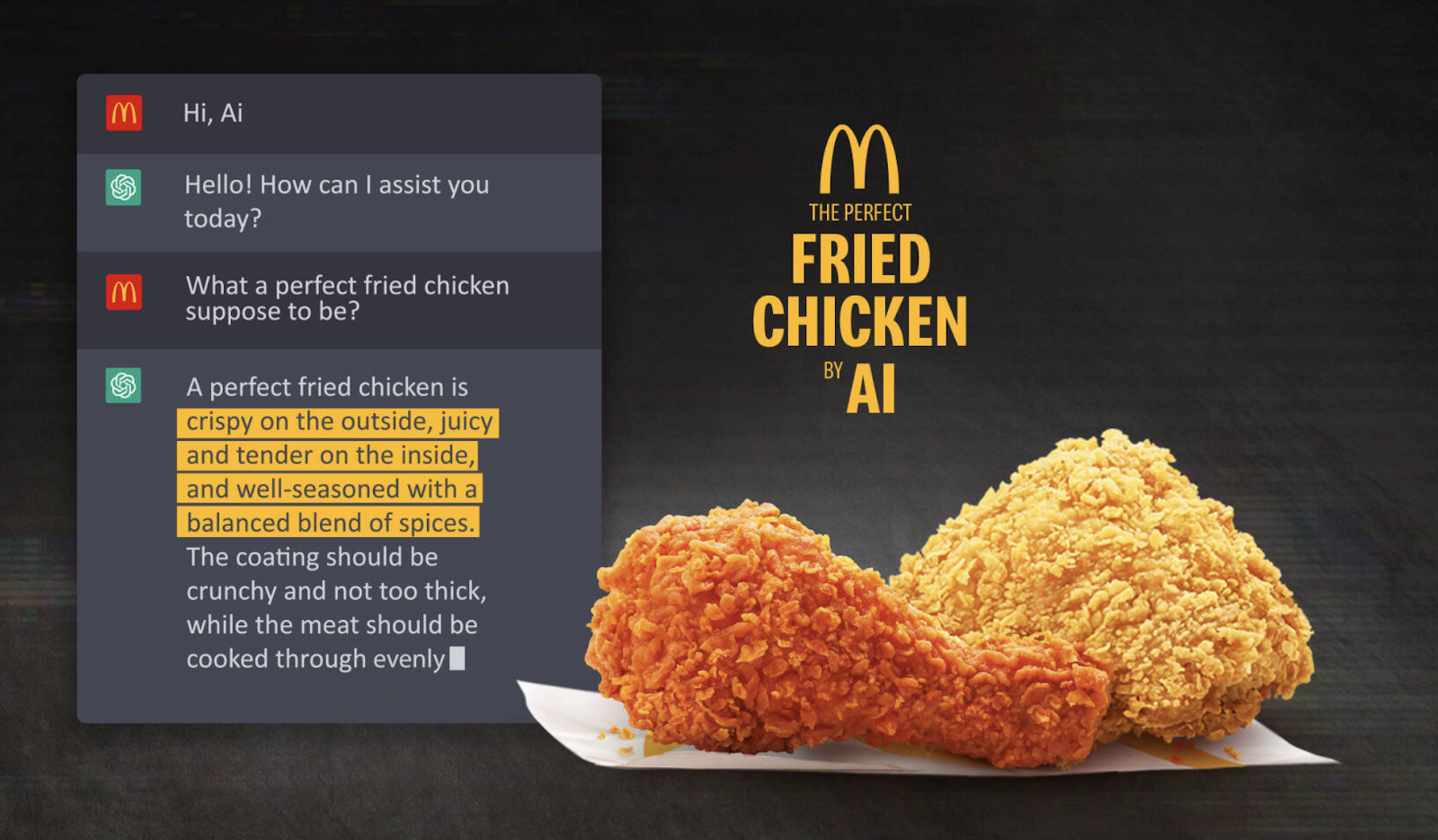
Credit: McDonalds, The Leo Burnett Group Thailand
That鈥檚 so clear that AI helps brands keep up with the innovativeness that the ad industry demands. So is this the future of advertising? Well, it may not solely be the future of advertising, but it certainly sets its foot for the long haul!
How AI Is Transforming Marketing Campaigns
From personalized email flows to predictive ad targeting, artificial intelligence is redefining both strategy and execution across industries. Let鈥檚 see how.
Why AI Marketing Campaigns Are Gaining Momentum
Manual workflows don鈥檛 scale. AI does.
Marketers today face growing pressure to deliver hyper-personalized, multi-channel campaigns while keeping costs predictable. AI campaigns solve for that by turning human-led tasks into data-driven, continuously optimized systems.
The Difference Between an AI Marketing Campaign and Traditional Campaigns
Here鈥檚 where things diverge:
| Traditional Campaigns | AI Marketing Campaigns |
| Static customer lists | Dynamic audience segments (ML-powered) |
| One-size-fits-all messaging | Hyper-personalized content at scale |
| Scheduled content testing | Real-time content adaptation |
| Manual A/B testing cycles | Continuous learning and optimization |
What Makes a Campaign Truly 鈥淎I-Driven鈥�?
Not every campaign using AI qualifies as an AI marketing campaign.
3 core ingredients separate truly AI-driven campaign content:
- Machine Learning Models: Predictive targeting, content selection, or creative optimization.
- Autonomous Decision Loops: AI adjusts campaign elements on its own, not just serving pre-written options.
- Data-First Creative: From GPT-powered copywriting to generative design, AI directly produces key campaign assets.
If AI isn鈥檛 making decisions or producing content, it鈥檚 not running the show.
20 Remarkable AI Marketing Campaigns That Set New Standards
AI marketing campaigns aren鈥檛 a novelty anymore. Across industries, brands are using AI to scale content, personalize messaging, and engage audiences in ways that feel both relevant and human.
While AI and advertising are two different concepts, they complement each other well if brands use them correctly. To understand better, we鈥檒l look at a few AI campaign examples from well-known brands.
馃抢 How We Chose These AI Campaigns:
With hundreds of brands experimenting with artificial intelligence, separating fleeting gimmicks from true marketing genius is no easy task. To curate this list of the world鈥檚 top AI campaigns, we evaluated each project against three core pillars:
- We didn鈥檛 just look for brands using AI to write a standard headline. We looked for pioneers pushing the boundaries鈥攚hether that meant using ChatGPT to write script dialogue (like Mint Mobile), using Deepfakes for hyper-personalization (like Cadbury), or processing millions of data points to simulate human evolution (like Nike).
- Does the use of AI actually make sense for the brand, or is it just a buzzword? The selected campaigns seamlessly blend the technology with the brand鈥檚 core identity, enhancing the message rather than distracting from it.
- A great campaign must perform. We prioritized campaigns that generated massive PR buzz, drove viral social media engagement, or significantly boosted user interaction (like the custom creations in Nike鈥檚 By You campaign).
Let’s now see top AI campaigns from famous brands:
Unilever鈥檚 Dove Viral Campaign via AI-Generated Influencer Content
Unilever introduced AI-generated product visuals for its Dove brand using Nvidia鈥檚 Omniverse platform, producing digital twins for influencer-led social media campaigns. This approach helped Dove reach 3.5鈥痓illion social impressions while bringing in for a limited-edition product line鈥攕howcasing how AI-generated content can drive both scale and tangible business results.
Why It Worked
It struck a massive chord of psychological and cultural relevance by turning artificial intelligence against its own industry standards.
While competitor fashion and beauty brands used generative AI to build unachievable models, Dove used the technology to expose how algorithmic bias distorts real beauty definitions. By feeding typical beauty prompts into image generators and showcasing the flawed outputs, the creative team built emotional trust. The campaign drove engagement because it positioned the brand as the human defender of real-world authenticity inside a synthetic digital landscape.
Heinz A.I. Ketchup
As part of a brand refresh aimed at younger consumers, Heinz incorporated and copy into its ketchup marketing materials. By integrating AI outputs into packaging, digital ads, and social media content, Heinz positioned itself as both familiar and forward-looking.
Why It Worked
Following up on a human experiment where global consumers were asked to draw ketchup from memory, Heinz fed abstract prompts, such as “ketchup scuba diving” or “ketchup in outer space,” into DALL-E 2.
Because the underlying neural networks had been trained on a massive internet dataset dominated by Heinz’s iconic glass bottle and arched labeling, the AI consistently generated images that resembled Heinz.
It was a brilliant proof of market dominance: proving that the brand is so embedded in the cultural imagination that even a machine cannot think of the category without visualizing Heinz.
Nutella 7 Million Unique Label
Nutella took AI mass personalization to shelf level by producing . Each was created using generative algorithms, turning standard product packaging into a collectible experience. According to campaign reports, the entire run sold out, reinforcing how AI-driven customization can translate into consumer demand at scale

I
Why It Worked
Using a custom-built algorithmic design engine, Nutella combined a vast library of distinct patterns and color palettes to automatically render 7 million unique, non-repeating jar labels. This execution shifted mass production into hyper-customized personalization at an unprecedented scale.
It triggered a user-generated collector craze across social media because consumers felt each jar was a one-of-a-kind piece of art, resulting in a sell-out of the limited run across international test markets.
H&M AI Digital Twins
H&M expanded its AI marketing efforts in 2025 by developing . These AI-generated avatars featured in ads, ecommerce product pages, and social media content, helping H&M streamline creative production without repeated photoshoots. The initiative also stood out for its ethical model: real-life talent retained image rights and received full compensation.

Why It Worked
It eliminated massive friction in the virtual conversion funnel by tackling the structural limitations of standard ecommerce photography.
By allowing users to create AI-driven “digital twins” of their unique body types, H&M transformed passive catalog browsing into a personalized fitting room experience. The model worked because it addressed the number-one profit killer in online apparel retail: return rates driven by sizing uncertainty. By giving shoppers a real-time preview of how garments drape, move, and fit across custom measurements, the campaign boosted average order value.
Yum 天美传媒女优s鈥� AI-Driven Email & Offer Campaigns
, which operates Taco Bell, KFC, and Pizza Hut, integrated reinforcement learning into its email marketing workflows. By continuously adjusting email timing and offer content based on customer behavior patterns, Yum was able to improve repeat purchase rates and reduce churn, applying AI not just for scale but for measurable long-term customer retention.
Why It Worked
It moved past basic A/B testing and replaced it with a continuously optimized, autonomous decision loop.
By integrating machine learning directly into their customer data platform (CDP), Yum 天美传媒女优s (KFC, Pizza Hut, Taco Bell) began dynamically predicting consumer flavor affinities, local weather variations, and exact purchase timing. The AI-driven engine automatically modifies email subject lines, custom offer structures, and push notifications on an individual, real-time basis.
In other words, it solved choice fatigue, serving hyper-targeted food recommendations the exact moment a consumer’s craving cycle peaks.
Netflix Ads Suite: AI-Integrated Storytelling
Netflix鈥檚 introduced modular AI-generated ad placements that blend directly into the visual worlds of shows like Stranger Things and Wednesday. Rather than interrupting viewers, these ads adapt to the mood and tone of the content they appear alongside, pushing the boundary between entertainment and advertising.
Why It Worked
It bridged the gap between passive streaming habits and real-time contextual ad placement.
In the simplest terms, the Netflix Ads Suite allows enterprise advertisers to match their creative assets to the exact emotional mood, narrative theme, or visual aesthetic of the show a user is binging.
For example, a food delivery ad can be programmatically triggered right after a scene where characters sit down for a meal. It worked because it eliminated jarring ad interruptions, blending the promotional material seamlessly into the user’s entertainment flow.
Sephora Virtual Artist AR & Chatbot Campaign
Sephora鈥檚 AI-powered Virtual Artist tool lets shoppers try on makeup virtually using AR overlays. In Southeast Asia, Sephora SEA paired this feature with targeted in-app campaigns, increasing engagement by 28%. Since launch, the tool has been used over times, turning virtual try-ons into a proven sales driver.
Why It Worked
It gamified product discovery by matching real-time facial mapping technology with automated conversational commerce.
The 3D live-face tracking app detects facial features to let consumers try on thousands of lipstick shades and eyeshadow palettes virtually, while the integrated chatbot handles product matching and shade navigation.
So, it created a frictionless transition from casual digital play directly to an in-app checkout basket, turning a fun social filter into a robust sales pipeline.
BMW x Lil Miquela 鈥淢ake It Real鈥� Campaign
BMW partnered with digital influencer to promote its all-electric iX2 through a visually rich short film blending real-world footage with AI-generated storytelling. The campaign earned creative industry awards and marked a milestone for the use of s in automotive marketing.

Why It Worked
The execution succeeded because it matched product identity with creative narrative: an entirely digital character learning to navigate the physical world inside a vehicle designed around the technology of the future. Blending real-world film footage with synthetic storytelling earned critical acclaim and cemented BMW’s status in internet culture.
Netflix鈥檚 鈥淓l Bot鈥� Chatbot for Stranger Things
To extend fan engagement beyond the show itself, Netflix introduced 鈥淓l Bot,鈥� a Facebook Messenger chatbot built around Stranger Things characters. Operating across 24 countries, El Bot maintained an , illustrating how AI-powered conversational experiences can keep audiences connected long after a campaign鈥檚 initial release.
Why It Worked
It turned standard broadcast promotion into an engaging alternate reality game (ARG) inside WhatsApp and Facebook Messenger.
“El Bot” allowed millions of fans to text back and forth with a custom conversational AI programmed to speak in the exact tone, lore vocabulary, and mysterious cadence of the show’s universe.
It worked brilliantly because it capitalized on community behavior, letting users hunt for show easter eggs, solve riddles, and unlock exclusive teasers through real-time dialogue.
Let’s now see top AI campaigns from famous brands:
Nike鈥檚 By You Campaign
uses AI-powered personalization to enable customers to design shoes. Choosing the color fill for the design elements gives them total freedom to make their shoes. Users can click on Customize on Nike鈥檚 page and start creating the shoes they like! They can do so either online or in-store. All they need to do is choose a standard model and customize it.

Why It Worked
This campaign allows users to design their shoes, making them feel cared for. Moreover, it drove considerable sales and consumer insights by diving into what makes a consumer tick and modifying future releases as per customer preferences.
Calm App X Amazon Web Services
Another wellness app example powered by AI is Calm App.
Instead of losing in vast content, including meditations, sleep stories, and nature sounds, Calm used Amazon and AI to help its users find what they needed most.
By teaming up with Amazon, Calm App implemented a powerful recommendation engine to analyze user data such as preferences, sleep patterns, and time of day to suggest personalized content.
Why It Worked
It’s impressive to see how Calm leverages AI to enhance well-being. With tailored experiences that cater to each user’s unique needs, Calm is democratizing the practice of meditation and mindfulness and making it more accessible and impactful for people of all backgrounds.
Mint Mobile’s ChatGPT Ad
Back in September 2023, Ryan Reynolds, a well-known Hollywood star & the founder of Mint Mobile, teamed up with OpenAI’s ChatGPT to write an ad script. It was totally new in the world of AI advertising.
It was also a playful experiment to see if AI could generate effective advertising copy. The resulting script, while humorous, was considered “mildly terrifying” by some viewers due to its bizarre and nonsensical nature. It wasn’t used for an actual Mint Mobile campaign but served as a fun exploration of AI’s potential in creative writing.

Credit: Mint Mobile YouTube
Why It Worked
Both instances of ChatGPT writing a Mint Mobile ad were more about generating buzz and showcasing the possibilities of AI technology than creating a real marketing campaign. However, they did shed light on the challenges and ethical considerations involved in using AI for creative tasks.
Cybercom Group鈥檚 Commercial by AI
Cybercom Group, an information technology consulting company based in Sweden, let AI tell its story in a video titled “Commercial by AI.”
The company founded in 1995, teamed up with data scientist Antti Hahto and created a unique clip by feeding the AI tons of Cybercom videos. They got a unique look at Cybercom through the AI’s eyes.
Why It Worked
Cybercom Group鈥檚 AI ad isn’t a mere & typical corporate propaganda. This is AI unplugged, channeling its unique interpretation of Cybercom’s vibrant culture and cutting-edge expertise. It is also the answer to “What kind of commercial would an AI create for an IT company?”
Virgin Voyages X Deeplocal
Virgin Voyages, VMLY&R, and AI startup Deeplocal teamed up back in July to create “Jen AI,” a revolutionary marketing campaign starring Jennifer Lopez.
This innovative ad leveraged AI to generate bespoke cruise invitations for each consumer, seamlessly blending celebrity magnetism with cutting-edge technology. In doing so, Virgin Voyages redefined the boundaries of personalized marketing, leaving competitors in its wake.
Why It Worked
The combination of AI personalization, celebrity appeal (JLo), and high technology creates a highly memorable experience for potential buyers/voyagers. It’s not just an ad; it’s an interactive opportunity to imagine oneself on a customized Virgin Voyages cruise.
World Wide Fund for Nature鈥檚 Annual #WORLDWITHOUTNATURE
AI helps majorly with the data. However, this sentence doesn’t entirely hold true. AI also allows brands to convey a strong message if they merge a global need with AI’s power, which is what WWF did. The collaborated with , a social and digital media company, to coincide with their annual #WorldWithoutNature campaign, which asks companies to remove wildlife from their branding.
Diverse creators within the CC Creative Community were encouraged to use AI tools to imagine what the world would look like without wildlife.
Through the campaign, WWF highlights the rampant loss of biodiversity in the world and encourages people to protect and appreciate the environment.

Why It Worked
Looking at these images displaying desolate landscapes and people wearing masks fills you with a sense of guilt and spikes fear at the same time鈥揷ompelling you to care for our planet or at least start to think of ways to do so. Many well-known brands participated in this movement, including FoodPanda, Earth Hour, and many more, fueling the virality.
So using AI to convey the significance of sustainability by making them think of a major negative consequence goes a long way in creating brand awareness while also making users aware of a larger picture.
How cool would it be to make your own Nike shoes? Even the thought makes you all jittery, right? Well, that鈥檚 the power of AI in advertising!
BMW 8 Series Gran Coup茅
Imagine this: an elite BMW that glides by, stealing the spotlight, but it’s not just the car that’s turning heads鈥攊t’s the spectacular, AI-designed artwork cascading over its sleek curves. BMW’s 8 Series Gran Coup茅 didn’t just roll out; it rolled out the red carpet for itself.
Why It Worked
BMW didn鈥檛 just stick to high-tech inside the car; they splashed it on the outside, turning their Gran Coup茅 into a roving piece of modern art. The AI marketing campaigns weren鈥檛 just patterns; they were stories being told in light and shadow, turning every car into a narrative of luxury that was impossible to ignore.
Cosabella
Now let’s whisper about something a tad more sensual. Cosabella, the maestro of delicate lace and sumptuous silk, decided to get personal鈥攔eal personal. With AI, they crafted ad campaigns that are like your best friend who knows exactly what you want to hear.
The ad video below is crafted based on Albert.ai鈥檚 suggestions for compelling Facebook ad imagery:
This strategic approach has led to a remarkable increase in ROAS, within the first month alone.
Why It Worked
Cosabella’s AI isn’t just smart; it’s the Cyrano to your Roxane, crafting ad copy that feels like love letters tailored to your every curve and contour. Every campaign feels like it’s Cosabella’s secret conversation with you, full of flirty winks that say, “I know what you like.”
Cadbury’s Shah Rukh Khan-My-Ad
Shah Rukh Khan-My-Ad, a collaboration between Cadbury Celebrations, Ogilvy India, and Wavemaker Mumbai, is truly a game-changer in personalized advertising.
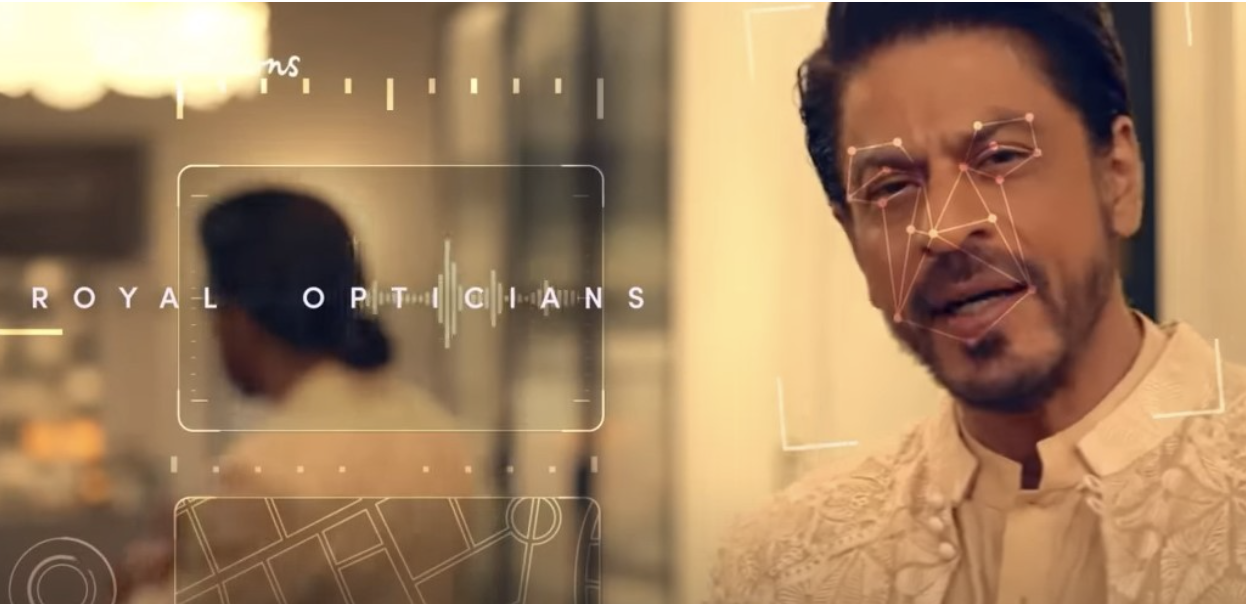
Credit: Cadbury, Ogilvy
Using machine learning and data analysis, the campaign created hyper-personalized video ads featuring Shah Rukh Khan, a well-known Bollywood star. Moreover, each ad featured the specific store name & location, making it feel like a personal message. The ads were served to viewers based on their proximity to the featured store, ensuring maximum relevance.
Why It Worked
The ad actually redefined personalized advertising. It also was a huge success, boosting sales for local stores and earning Cadbury Celebrations much goodwill. What’s more, the ad received numerous accolades, including Graphite Pencils at the D&AD Awards and a Shortlist at the Cannes Lions.
Nike’s Never Done Evolving, ft. Serena
After Serena Williams announced her retirement, Nike X AKQA released the campaign that used advanced machine learning (ML) and AI to analyze archival footage from Serena鈥檚 career.
Recognized as one of the top AI marketing campaigns, 鈥淣ever Done Evolving鈥� featured two hyper-accurate AI-generated avatars鈥�17-year-old and 35-year-old Serena鈥攆acing off in a virtual tennis match.
Why It Worked
The campaign earned recognition at Cannes Lions, winning the prestigious Digital Craft Grand Prix for its technical excellence and emotional resonance.
What鈥檚 more, it captured over 1.7 million viewers and recorded a staggering 1,082% increase in organic views, breaking Nike鈥檚 previous records.
Kalshi’s NBA Ad
Kalshi, a CFTC-regulated American financial exchange, released a 30-second spot during the 2025 NBA Finals and became part of the AI advertising game.
By spending just $2,000 and using AI agents & tools, Gemini and ChatGPT, Kalshi reached 20 million viewers.
The world鈥檚 gone mad
— Kalshi (@Kalshi)
What Made It Revolutionary
Managed by a single AI filmmaker, PJ Accetturo, the AI NBA ad is a strategic statement for the entire marketing ecosystem. It illustrates how brands can compress production cycles, remain culturally nimble, and amplify their presence at high-impact moments, all on a shoestring budget.
It was also announced as 鈥�the first AI-generated ad on primetime.鈥�&苍产蝉辫;
How 天美传媒女优s Can Start Using AI for Marketing Campaigns
Step 1: Choose the Right AI Tools
Stack matters. Here鈥檚 what top teams actually deploy:
- For Content: Jasper, Writer, ChatGPT
- For Ads: Albert AI, Pattern89
- For Customer Journeys: Dynamic Yield, Salesforce Einstein
- For Design: Midjourney, DALL-E, Adobe Firefly
馃攳 Pro tip: Start small with monthly plans before scaling. Avoid annual lock-ins until ROI is clear.
Step 2: Train Your Campaign AI with the Right Data
AI doesn鈥檛 magically know your audience. Feed it structured, relevant data:
- CRM records
- Purchase histories
- Behavioral tracking
- Past campaign engagement stats
Dirty data = bad predictions. Always clean first.
For businesses working with large or complex datasets, can play an important role in preparing, structuring, and refining the information used to power AI systems. High-quality, well-organized training data helps teams build more reliable models, improve campaign personalization, and make better data-driven decisions at scale.
Step 3: Test, Learn, and Optimize Continuously
AI is iterative. Launch once, then:
- Monitor KPIs weekly
- Adjust inputs or creative variants based on insights
- Keep feeding fresh data for continuous model learning
AI for Small Teams vs. Enterprise Campaigns
Whether you鈥檙e running solo or leading a large organization, AI fits into marketing operations differently depending on team size, resources, and campaign complexity. Smaller teams lean on ready-made tools for speed and simplicity, while enterprise brands often invest in custom-built AI systems. Here鈥檚 how that breaks down:
| Company Size | Best Use of AI |
| Solo / Small Biz | AI content generation, email automation |
| Mid-Size Agency | Multi-channel orchestration, predictive analytics |
| Enterprise | Custom AI models, in-house ML ops |
The Future of AI Campaigns: Trends to Watch
As AI technologies evolve, three major trends are shaping the next generation of marketing campaigns鈥攂ringing precision, creativity, and emotional relevance to a new level.
Generative AI and Creative Automation
Generative AI isn鈥檛 just for experimental visuals anymore鈥攊t鈥檚 becoming a studio in its own right. According to Gartner, brands are increasingly relying on AI to rapidly augment, accelerate, and create new content鈥攆rom written blogs to short-form videos and .
predicts that by 2025, AI-powered content creation will 鈥渕ature,鈥� enabling marketers to produce high-quality creatives without the traditional time and resource constraints.
AI-Powered Sentiment & Contextual Targeting
Campaigns are evolving beyond basic demographic targeting. AI now enables emotion-based, contextual targeting driven by real-time sentiment analysis. Fast-changing platforms like Roku and AWS are tailoring ads by emotional resonance鈥攕uch as mood, tone, and topical relevance鈥攑aving the way for emotionally intelligent ad delivery.
And in retail and beauty, McKinsey warns brands will need to balance hyper-personalized marketing鈥攑otentially boosting 鈥攚ith strong privacy and ethical guardrails.
Predictive Campaign Performance Modeling
AI-driven predictive analytics are evolving from retrospective insights to foresight. A review in the Journal of Marketing & Social Research highlights how machine learning models can forecast consumer behavior and campaign outcomes in real-time. Marketers expect this shift to empower them with in campaign performance before launch鈥攏o more flying blind into live execution.
Benefits of AI in Advertising
AI marketing agencies are at the forefront of a significant shift in campaign planning, wielding the power of AI marketing campaigns to drive unparalleled results. They鈥檒l introduce you to a suite of benefits that make AI indispensable in modern advertising. With it, your campaigns are not just planned; they鈥檙e engineered to succeed through a deep understanding of consumer behavior. Of course, this is only possible if you find the right agency in the marketplace of digital marketing. We all know that it is a bottomless pit but luckily, we鈥檝e already sorted things out for you!
This allows for targeting with surgical precision, ensuring that your message reaches the audience most likely to engage with your brand. Additionally, AI streamlines the entire advertising process, from bid to placement, maximizing efficiency and reducing the guesswork often associated with ad campaigns. The data-driven insights provided by AI mean your ad spend is not just an expense but a strategic investment, delivering tailored messages at the time when they’re most effective.
This level of customization in advertising was once a lofty goal, but with AI, it’s today’s reality. The upshot? A smarter, cost-effective, and dynamic approach to capturing consumer attention in a crowded digital ecosystem.
- Targets Ads Effectively
Consider a billboard that dynamically adjusts its content based on the demographic of the passerby鈥攖his captures the fundamental role AI plays in digital advertising. Delving into the expanse of Big Data, AI discerns intricate consumer patterns: their clicks, purchases, and the optimal times they鈥檙e ready to engage.
Utilizing this deep well of data, AI ensures that advertisements are strategically presented to the most receptive audiences at moments of peak interest. This refined targeting, fueled by AI marketing campaigns, is akin to a finely tuned dialogue with the market, ensuring your marketing investment is not merely a broadcast but a conversation with the right listeners.
- Enhances Customer Satisfaction
It鈥檚 like your customers have a buddy in the business who knows what they鈥檙e into. AI meticulously examines data from previous purchases, service interactions, and digital interactions to understand each customer’s unique preferences. With this insight, companies can craft tailored experiences鈥攐ffering suggestions and promotions that resonate deeply with the customer鈥檚 individual needs and desires.
This approach isn’t about the volume of ads; it’s about precision and personalization, ensuring that customers feel valued and seen, fostering satisfaction, and encouraging repeat business.
- Increases Multichannel Engagement
AI acts as an expert concierge for your brand, available across every digital platform your customers use, from smartphones to desktops. It ensures that the dialogue with your customers remains fluid and engaging across all channels. For brands, this equates to maintaining a consistent and captivating presence in every virtual space where customers congregate, seamlessly continuing conversations, and enhancing the customer experience at every touchpoint.
This all-over approach guarantees that every interaction is not only relevant but also reinforces the customer’s connection with the brand.
How Does AI Revolutionize Ad Copy and Design Creativity?
Step into the avant-garde studio where AI is the artist, and you’ll find a landscape teeming with creativity redefined. The revolution AI has brought to ad copy and design isn’t just a wave鈥攊t’s a digital tsunami reshaping the shores of the advertising world.
With ad copy, AI is like a linguist mixed with a psychologist, as it understands both language structures and consumer psychology. By analyzing successful ad campaigns, AI can pinpoint what makes copy resonate with audiences.
AI crafts messages that are not only grammatically sleek but also emotionally charged, designed to strike a chord with the reader when the correct prompts are provided to AI and meticulous editing is done on AI-generated outcomes.
In the design arena, AI is the disruptor we didn鈥檛 know we needed. Remember those times when creating a design meant endless hours of work? With just a small amount of input, it can produce an endless variety of designs, providing a visual feast that may take days to create by hand. Not only are the designs varied, but they have also grown as a result of an in-depth understanding of the small details that draw in customers.
AI’s ability to test and learn means each iteration is more refined. For ad design, this means color palettes, typography, and imagery that aren’t just aesthetically pleasing but psychologically compelling. AI is a meticulous artist who knows which brush stroke will make you stop and stare.
Last Words
In this exploration of AI advertising, we’ve uncovered its potential to revolutionize how brands engage with their audiences, offering personalized, efficient, and creative campaigns at scale.
Embrace this technology as a powerful tool to enhance, not replace, the human touch in your marketing efforts. Employ it to make informed, data-driven, and timely decisions, always keeping the consumer experience at the forefront. By doing so, your brand is set to not just succeed but to truly stand out in the bustling digital marketplace.
FAQs About AI Marketing Campaigns
Before jumping into AI marketing campaigns yourself, it’s natural to have some lingering questions. Below are answers to the most common questions marketers ask when exploring AI-driven campaign content for the first time.
What is an AI marketing campaign?
A marketing campaign in which machine learning models manage targeting, content creation, and performance optimization鈥攏ot just simple automation.
Can AI create content as effectively as humans?
Yes. For formats such as email copy, ad variations, and landing pages, AI can match or surpass human benchmarks in both quality and scale.
How are global brands leveraging AI campaigns to balance creativity with data-driven insights?
Smart global brands are using AI as an engine that scales human imagination. Creative teams still come up with the big, risky, emotional hooks, but they feed these concepts into machine learning algorithms that can process massive amounts of consumer data in real-time. The AI then takes that core idea and spins out hundreds of hyper-personalized iterations, testing which colors, headlines, and formats resonate best with specific audiences so the brand can back up its boldest creative choices with undeniable performance data.
How should I start using AI for marketing campaigns?
Select one focus area鈥攅mail, AI advertising campaigns, or content. Deploy a specialized tool and conduct controlled pilots before scaling wider.
Are AI marketing campaigns suitable for small businesses?
Yes. AI-driven marketing tools are now accessible to solo marketers and small businesses, with entry points starting around $50 per month.
What tools are commonly used for AI campaign content?
Key platforms include Jasper, ChatGPT, Midjourney, Adobe Sensei, and Salesforce Einstein鈥攃overing text, visuals, and customer journey optimization.
How do generative AI tools streamline the creation of AI-generated advertising without losing brand voice?
The trick to scaling ad production without sounding like a generic robot is building strict digital guardrails. Instead of just letting designers loose on public platforms, enterprise brands use custom-trained AI models that are pre-fed with their specific brand guidelines, past successful copy, and unique visual identity. This allows teams to generate localized variations, swap backgrounds, and tweak video formats in seconds, giving them a massive speed advantage while ensuring every single output stays perfectly aligned with the brand’s established personality.
What performance metrics prove the ROI effectiveness of integrated AI advertising campaigns?
At the end of the day, the proof is in the data, and AI advertising campaigns consistently move the needle where it matters most: conversion rates and ad spend efficiency. Because these algorithms match the perfect creative variation to the right user at the exact right moment, brands regularly see a significant lift in Click-Through Rates (CTR) alongside a noticeable drop in Cost Per Acquisition (CPA). By automating the tedious A/B testing process, companies are securing a much healthier Return on Ad Spend (ROAS) while drastically lowering the initial cost of asset production.
What legal and ethical considerations should brands check before launching an AI campaign?
Stepping into AI advertising means navigating a legal minefield, starting with ensuring your generated images or music don’t accidentally infringe on copyrighted works used to train the models. 天美传媒女优s also have to be incredibly careful with the right of publicity (using any celebrity’s likeness or voice requires airtight contracts, not just clever prompt engineering), and they must keep consumer data safely locked within closed-loop systems to avoid GDPR or CCPA violations. Finally, there is a growing ethical responsibility to be transparent, no doubt, as audiences and regulators increasingly demand clear disclosures when a marketing asset is “entirely” AI-generated.


